


South Africa is at war – one not fought on battlefields, but in homes, schools, places of worship, and workplaces. It’s a war against Gender-based violence (GBV). GBV in South Africa is not merely a social ill but a national emergency. Despite constitutional protections and legislative frameworks, millions of women and children continue to face violence, often within their own homes. Recent events and studies have highlighted the pervasive nature of this crisis and the urgent need for action.
The reality
A 2024 national study revealed that over 35% of South African women aged 18 and older (approximately 7.8 million individuals) had experienced physical or sexual violence in their lifetime (Zungu et al., 2024). Several recent incidents have brought the severity of GBV into focus:
- Alleged rape of a 7-year-old girl at her school (Magome, 2025).
- Limpopo man charged with the rape of his 4-year-old niece (Lekampe, 2025).
- The alleged rape of a 101-year-old woman in Limpopo (Republic of South Africa, 2024)
- The conviction of a father who raped is 17-year-old daughter (South African Legal Information Institute, 2025).
These events are not a handful of the cases occurring in South Africa.
Why does this continue?
GBV in South Africa persists, not just because of individual acts of violence, but because of the environment that enables it.
Our society often teaches boys that aggression equals masculinity. Survivors are shamed, justice is slow, and institutions that should protect often betray. Even the law, while progressive on paper, falters in practice. Perpetrators walk free. Survivors walk alone.
And then there’s the fatigue – the dulling of outrage when yet another woman goes missing when another child is raped when another body is found. We scroll past hashtags shaking our heads and often move on. But survivors don’t get to move on. They live in the aftermath.
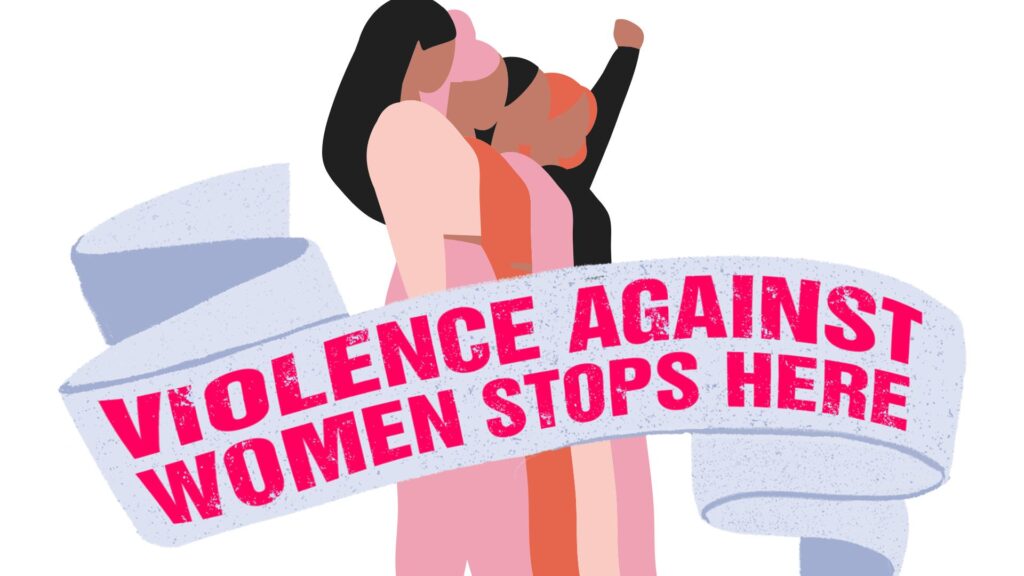
A ray of hope:
Despite the horror, South Africans are rising.
- The Gen G Engage app: launched in March 2025, it uses technology to empower survivors, connect communities, and make information on rights and resources available (Peter, 2025).
- Kwazulu-Natal’s 365-Day GBV initiative: launched in late 2024, brings faith leaders and communities together to challenge violence year-round and not just during awareness campaigns.
- Like The Together Project, there are numerous non-profit organisations in South Africa aimed at assisting victims of GBV as well as prevention.
So what now?
We need to stop asking when this will end and start asking: what am I doing to end it?
- Speak up, even when it’s uncomfortable.
- Support survivors: believe them, stand by them and fight for them.
- Demand accountability from schools to police stations to Parliament.
- Never underestimate the power of naming the problem. Silence is not neutral, it’s complicit.
Final words:
This isn’t just a women’s issue. It’s not just a South African issue. It’s a human issue. A justice issue. The question is no longer if we should act. How soon? The answer: now.
References:
Lekampe, K. (2025, March 5). Limpopo man charged with raping 4-year-old niece. SABC News. https://www.sabcnews.com/sabcnews/limpopo-man-charged-with-raping-4-year-old-niece/
Magome, M. (2025, January 23). South African officials revoke school’s license after rape of 7-year-old sparks outrage. AP News. https://apnews.com/article/south-africa-school-rape-girl-protest-91f1bcbfbe2c43059c8c49b998bd02ed
Peter, Z. (2025, April 1). Gen G Engage app launched to empower youth against gender-based violence. Weekend Argus. https://www.iol.co.za/weekend-argus/news/gen-g-engage-app-launched-to-empower-youth-against-gender-based-violence-f3405bfa-b47b-4af8-869b-ee2c65392cf6
Republic of South Africa. (2024, September 5). Limpopo police hunt suspect who allegedly raped 101-year-old woman. SA Government News Agency. https://www.gov.za/speeches/limpopo-police-hunt-suspect-who-allegedly-raped-101-year-old-woman-5-sep-2024-0000
South African Legal Information Institute. (2025, March 13). Ramadimetja v The State (A602/2022) [2025] ZAGPPHC 227. https://www.saflii.org/za/cases/ZAGPPHC/2025/227.html
Zungu NP., Petersen Z., Parker W., Dukhi N., Sewpaul, R., Abdelatif N., Naidoo I., Moolman B., Isaacs D., Makusha T., Mabaso M., Reddy T., Zuma, K. and The SANSHEF Team (2024). The First South African National Gender-Based Violence Study: A Baseline Survey on Victimisation and Perpetration. Cape Town: Human Sciences Research Council